

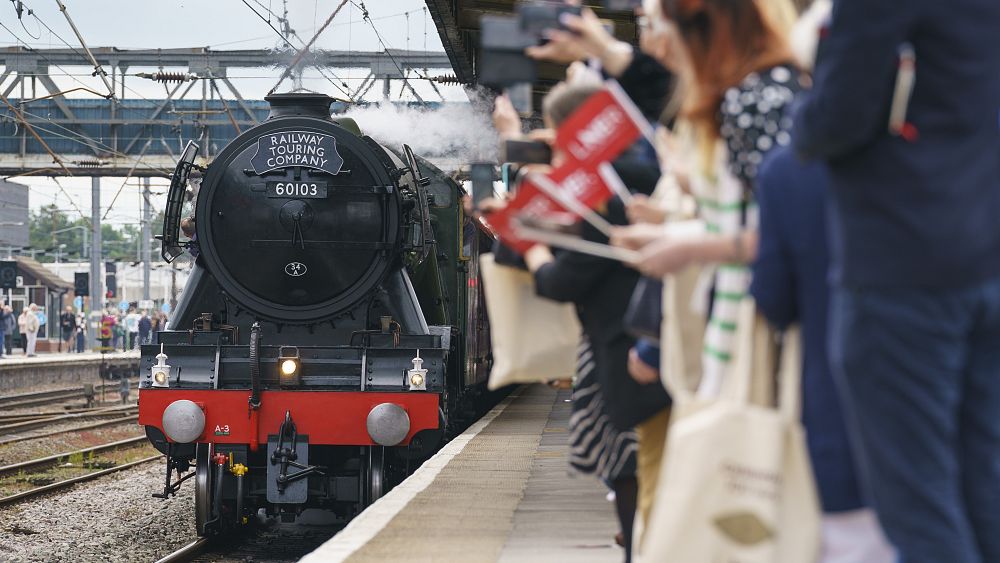
If you know anything about trains, you’ve probably heard of The Flying Scotsman.
Often described as the world’s most famous steam locomotive, it has starred in films, broken records and toured the world.
But did you know she’s now 100 years old?
The Flying Scotsman is 100 years old
First built in 1923 in Doncaster, UK, The Flying Scotsman served LNER’s London to Edinburgh East Coast Mainline for 40 years.
She first began service on 14 February 1923 with just the simple number name 1472. It was only when put on show at the British Empire Exhibition in London in 1924 that she was given the number 4427 and named after the route running between London and Edinburgh - The Flying Scotsman.
Though she’s known for her iconic green colour, that hasn’t always been the case. During World War Two, like all trains, she was repainted black and also had a brief stint as a blue locomotive before returning to the classic British Rail Green.
In 1934, The Flying Scotsman became the first locomotive to achieve a speed of 100 miles per hour and dramatically reduced the journey time between the two capitals.
The end of her career on the East Coast mainline in 1963 was not the end of her story though.
In a number of other feats, the train broke distance records and even raced against boats and planes to prove its incredible speed.
In the 1960s she travelled to the US and Canada on a promotional tour. And in 1988 she became the first locomotive to circumnavigate the world when she was shipped to Australia. There she also set a new record for the longest non-stop run by a steam locomotive at 679 km.
For a time, The Flying Scotsman also pulled the Orient Express Pullman train.
The Flying Scotsman on the big screen
The iconic train has made cameo appearances in many films and TV over the years.
She could be seen on the platform in Kings Cross in the first Harry Potter film. The steam engine also popped up in 102 Dalmatians, Agatha (1979), Top Gear and in appeared in animated form in Thomas the Tank Engine film Thomas & Friends: The Great Race.
The Flying Scotsman returns home
To mark the centenary of The Flying Scotsman, this weekend she made a historic trip leaving London and travelling up the UK’s east coast to Scotland.
On her way, she stopped in Doncaster, Yorkshire where it all began.
Over more than 100 years, Doncaster Works built thousands of locomotives and carriages. It was the industrial centre of the city and at its peak in the early 20th century it covered over 200 acres and employed 4,600 workers. Some carriage refurbishment work is still carried out on part of the site.
“Doncaster is the place that birthed the Flying Scotsman,” said rail historian Dr David Turner.
“It was created by the people of Doncaster and they are incredibly proud of their railway heritage.”
Watch the video above to see The Flying Scotsman in action.