

 ADVERTISEMENT
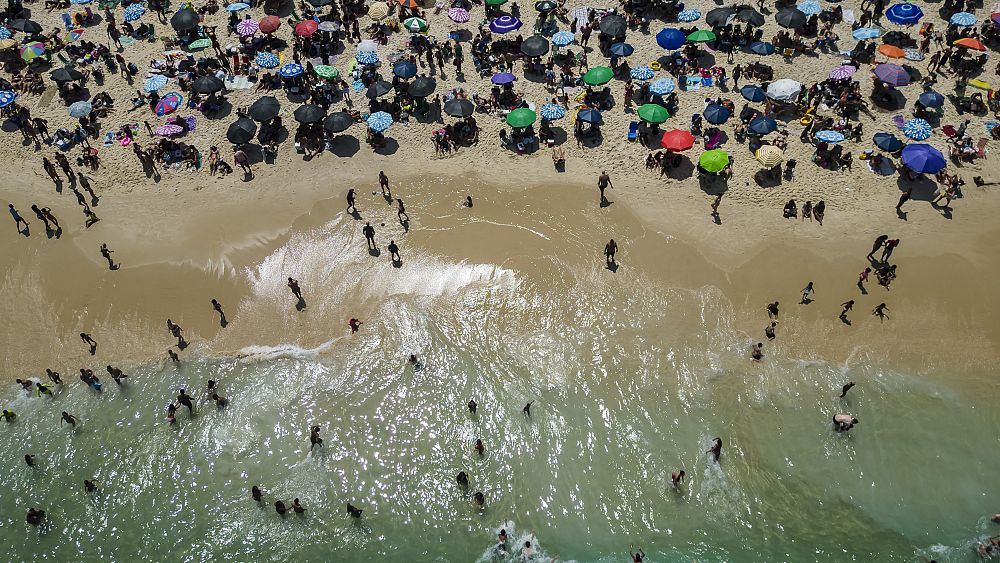
For the first time in more than a decade, Rio de Janeiro's beaches are safe for swimming.
The coastline of Brazil’s seaside city has been plagued with raw sewage, industrial pollution and rubbish for years.
Guanabara Bay, with its iconic views of Sugarloaf Mountain and Christ the Redeemer, has been especially hard hit.
But a massive clean up operation is finally changing that.
Water testing, sanitation initiatives and favourable weather conditions have now transformed the waters into a pristine playground for beach lovers.
How has Rio cleaned up its beaches?
In 2021, Rio state authorities privatised the region’s failing water and sanitation service Cedae. It is now owned by Aguas do Rio, which has been working to prevent untreated sewage from being dumped on the city’s beaches.
Under a five year plan with a promised 2.7 billion reais (€508 million) investment, the company has managed to overturn years of failed cleanup programmes.
It has installed new pumping systems, revitalised the city’s sewage systems and diverted the polluted Rio Carioca river - which flows into Guanabara Bay - to an interceptor that prevents rubbish and sewage from reaching the beach.
It has also removed hundreds of tonnes of waste from the interceptor to increase its flow and drainage capacity. Parts of it had not been cleaned since its construction 50 years ago.
“When we see such a quick change in certain areas of the Guanabara Bay we realise that what was lacking was serious work, permanent work,” says Brazilian biologist Mário Moscatelli. “And that’s what has been happening for the last two years up until now.”
He believes that in the next 15 years, the whole bay - which spans four cities - could be as clean as the Rio section.
By the end of Aguas do Rio’s 35-year contract, it has pledged 24.4 billion reais (€4.6 billion) to bring the sewage-treatment rate to 90 per cent.
This follows years of broken promises to improve sewage treatment and clean up the polluted bay, including in the lead up to the 2016 Olympics when the state declared insolvency and failed to address the headline-grabbing pollution.
Swimmers are returning to Rio’s waters
Along with Guanabara Bay, Botafogo, Flamengo and Copacabana beaches have also seen the benefits.
Botafogo “used to be unsuitable for swimming, no one ever came here” says fisherman Abel da Silva. “Now people are coming back.”
The country's State Environment Institute (INEA) has been collecting samples from beach waters since 2007 and analysing for faecal bacteria.
Its 22 September readings showed that only two sections in Barra da Tijuca beach, on Rio’s west side, were unsuitable for swimming.
In the past, entire beaches have been deemed unsuitable to swim in. Now all beaches have swimmable sections.
ADVERTISEMENTRio’s State Government puts the improvement down to recent sanitation works and a lack of rain in recent days.