

 ADVERTISEMENT
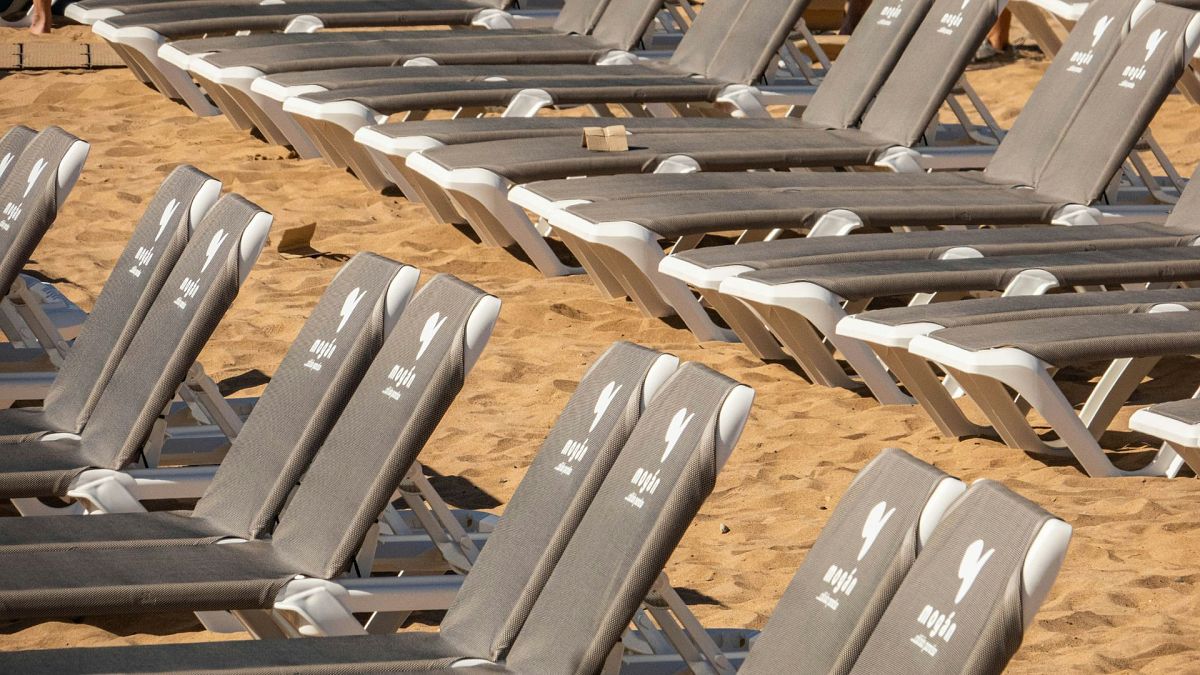
A wave of vandalism struck two popular beaches in Los Cristianos, Tenerife, last week. More than 230 sunbeds were defaced and sprayed with anti-tourism graffiti such as "Canarias se defiende" (The Canary Islands defend themselves) and "Canarias no se vende" (The Canary Islands are not for sale).
Discovered in the early hours of Thursday morning, 5 December, sunbeds on both Las Vistas and El Camison beaches were damaged by several unknown individuals in what Arona City Council describes as a ‘coordinated attack’.
Las Vistas suffered the destruction of 100 sun loungers and El Camison 136, while a nearby shopping centre was also daubed in graffiti.
A video shared online in the days after shows vandals slashing sunbeds with a knife. Canarian Weekly reports that the damages are estimated at €5,000.
“We are against all types of vandalism and the lack of civility of some people who attack Arona's heritage, which causes serious harm to both residents and visitors,” said Mayor Fátima Lemes in a statement. She reiterated that such violations are punishable by law and appealed to citizens for help in identifying the perpetrators.
The latest in a wave of anti-tourism protests
The Canary Islands have become a hotspot for anti-tourism sentiment. In April, tens of thousands of protestors took to the streets in the archipelago, demanding limits on what they see as uncontrolled development harming the environment and people's way of life. Some activists went on a hunger strike in Tenerife in an attempt to halt the construction of a new hotel and beach resort.
Demonstrations spread to many of Spain’s popular tourist destinations, including the Balearic Islands, Alicante, various cities on the south coast and Barcelona. In most instances, protests were peaceful, although there were some reports of foreigners being squirted with water pistols and shouted at to ‘go home’.
However, some activities have been more concerning. In July, apartments in Seville had lock boxes smeared with faeces amid demand for an end to Airbnb licenses. In October, anti-tourism protestors waving flags and banging drums stormed the beach in Playa de las Americas, Tenerife, crowding around sunbathing visitors in an attempt to intimidate them.
There has been an attempt to defuse the situation in many cities and regions. In Barcelona, for instance, short-term tourist apartments will be banned from 2028. Palma de Mallorca is capping the number of cruise liners that can dock at the port, and Tenerife has introduced a limit on the number of visitors to some of its national parks.
Why the Spanish are unhappy with tourism
Protestors who have been approached by the media stress that they’re not against the tourism industry per se. Tourism provides more than a third of the Canaries’ economic input and 40 per cent of its jobs, so the locals understand the value of visitors.
Activist Daniel Cabrera told the Standard, “We want tourism. What we do not want is over-exploitation and garbage tourism that does not benefit the local economy.” He further explained that 75 per cent of the money from island hotels and other businesses ends up outside Spain, adding, “That can't be tolerated.”
The problem lies in what local people consider to be an unchecked expansion of tourism in the country. They say this is leading to rising housing costs, environmental issues and strain on public services.
According to the National Statistics Institute (INE), 34 per cent of Canary Islanders were at risk of poverty or social exclusion in 2023, the highest figure in Spain after Andalucia.
But not all locals feel the same way. Augusto Ferreira, a restaurant owner in the Canaries, organised one counter-protest called ‘Lanzarote Loves Tourism’, in an effort to highlight the importance of tourism to the islands’ economy.
The Spanish National Statistics Institute reported a 10.3 per cent year-on-year increase in visits to the Canary Islands, with 14 million international tourists arriving in 2023. Those millions, in turn, brought a record-breaking 20 billion euros to the islands.