

 ADVERTISEMENT
Rush hour in the French capital is undergoing a revolution.
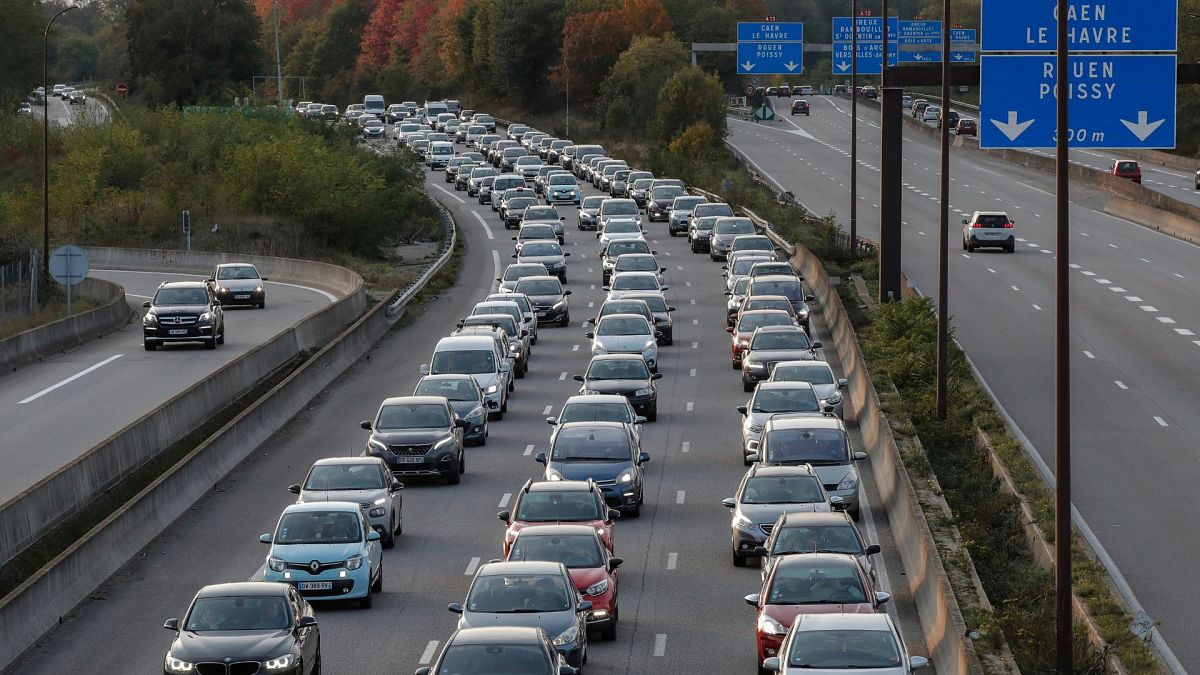
Starting this week, Paris is introducing a new car-sharing lane during peak hours on its notoriously choked Périphérique ring road, a measure that city officials hope will alleviate congestion and reduce pollution.
From 7am to 10:30am and 4pm to 8pm, the leftmost lane - typically the fastest-moving - will be reserved for vehicles carrying at least two passengers. The shared lane will also be available to public transport, taxis, emergency services, and individuals with disabilities.
The policy, first tested during the 2024 Olympic Games, is now being rolled out permanently by the Socialist-led city hall. Drivers have until May to adjust before AI-powered enforcement kicks in. After that, violators will face €135 fines.
The fight to reclaim Paris from cars
With around 1.5 million daily journeys, the Périphérique is one of Europe’s busiest roads - and the most polluted area in the capital, according to city hall.
“The Périphérique is… a real health scandal,” Dan Lert, deputy mayor for ecological transition, told Le Monde. “The half a million people who live along it are exposed to pollution levels that are still too high, with 30 per cent of children suffering from asthma.”
To reduce traffic jams and address air quality concerns, officials slashed the speed limit from 70 kilometres per hour to 50 kilometres per hour last October.
While seven kilometres of the 35-kilometre ring road are exempt from the new car-sharing initiative, city hall has earmarked €7 million to extend the measure further.
But not everyone is on board with green-leaning mayor Anne Hidalgo’s plans. Valérie Pécresse, head of the Île-de-France region, has warned that the policy could worsen congestion and has called for an “exhaustive” assessment within three months.
Paris’s battle against pollution and gridlock
The battle has not been confined to the Périphérique. In recent years, the city of lights has sought to reshape how Parisians move through their city.
In 2013 and 2016, respectively, the city hall banned traffic from the left and right banks of the Seine. Last year, Paris introduced limited traffic zones (ZTL) in the first four arrondissements, hoping to reduce noise and air pollution in the city centre.
Under Hidalgo, Paris has also added 500 kilometres of cycling lanes and cracked down on high-polluting vehicles such as SUVs.
Paris follows a wider European trend toward car-free mobility
Paris is far from the only place in Europe rethinking its relationship with cars. Cities including London, Amsterdam and Vienna have been recognised for their increasinglygreen public transport networks, whileOslo has removed most on-street parking in its city centre in favour of pedestrian-friendly spaces.
Meanwhile,Sweden has surpassed EU targets for renewable energy in transport, with over 33 per cent of its energy mix coming from renewables by 2023 – well ahead of the EU’s 29 per cent target for 2030.
Improved public transport is also influencing commuter habits. When Montpellier made public transport free for residents in late 2023, the southern French city saw ridership increase more than 20 per cent in just five months, and Luxembourg residents have praised their leaders for making all forms of public transport completely free in 2020.
ADVERTISEMENTWhile it remains to be seen how Paris’s latest initiative will impact daily commutes, officials say the goal is clear: fewer cars, cleaner air, and a more livable city.