

 ADVERTISEMENT
Christmas holds a special place in Dr Amy Pollard's heart. As a child, she recalls carol-singing with her neighbours, including the ‘Boy Next Door’.
After growing up and leaving home, they only saw each other during the holidays.
“The carol-singing and the community always kept us connected,” she says. “We had our first kiss after carol singing on Christmas Eve.” How’s that for a Hallmark holiday movie?
Now married and living in Whitehall Park in London, they were missing one important thing: their beloved Christmas spirit.
Moving away from their small town community on the outskirts of Bristol to the big, anonymous capital, it became harder to meet people and cultivate festive cheer. Especially in a neighbourhood where things got stolen and where people had been stabbed.
So in 2015, Amy decided to turn Whitehall Park into a living advent calendar.
What is a living advent calendar?
In recent years, Europe has gone advent calendar mad. You can countdown to Christmas with gourmet cheeses, craft beers, miniature whiskeys or even lacy lingerie.
Yet nothing brings the festive spirit quite so well as living advent calendars.
Taking things one step further, they transform an entire neighbourhood into a Christmas countdown.
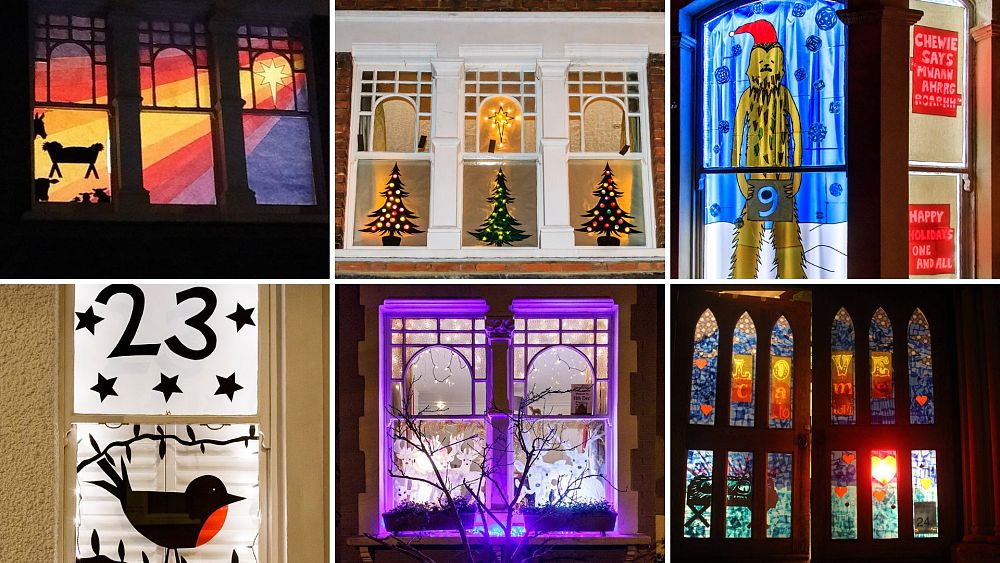
“Each night, a different person decorates their window, and then we have a pavement party,” explains Amy.
The hosts bring out mince pies or onion bhajis, and the neighbours gather and chat on the chilly street. “It's magical,” says Amy. “It makes people feel safe and connected to their neighbourhood.”
Living advent calendars: A tradition born in Sweden
Amy drew her inspiration from the ‘Levande julkalendern’ tradition in Sweden.
The first ever life-size advent calendar was born in the narrow alleyways of Stockholm's Old Town in 2005. From the first day of December, each evening at 6.15pm, a door, window or shutter bangs open, casting a ‘hygge’ light onto the cobbles below.
Performers begin telling stories, reciting poetry or playing music. The tradition has been going strong for 18 years, even during the COVID-19 pandemic, when organisers took the advent calendar online.
The concept has now spread across Europe, bringing festive joy and community spirit.
Where can you see living advent calendars in Europe?
Villages throughout Europe have been inspired to organise their own living advent calendars - with each location adding its unique twist to the event.
In the town of Claret, in southern France, December nights are far milder than in Scandinavia, and the nightly festivities involve grilling meat and tapping kegs of beer.
The organisers hide numbers around the village, and participants must search the streets to find where the next party will be.
ADVERTISEMENTMeanwhile, in the Alpine village of Troistorrents in Switzerland, cold temperatures do nothing to dampen revellers’ spirits.
Organiser Baptiste Dubosson recalls a freezing night in 2021 when he was worried that people wouldn't show up for the event, which was being hosted by a young couple.
“When I got there, there were loads of people warming up by a bonfire,” he says. “It just goes to show how important this kind of tradition is for people, even when they lead hectic lives.”
This year, Baptiste is looking forward to a night organised by the village's Ukrainian refugee population.
Living advent calendars offer ‘a great way to meet people’
One of Europe's largest advent calendar events takes place in Folkestone, an artsy town on the southeast coast of England.
ADVERTISEMENTThe event is a “smorgasbord” of performances, says cofounder Sue Hurle. Twelve professional acts are commissioned, and community groups organise the remaining 12.
The result is wonderfully eclectic: one door might reveal an orchestra playing instruments crafted from garbage. The next might be a professionally run opera or an amateur puppet show.
Sadie and the event’s cofounder, Sue Blakesley, are determined to get everyone involved in the festivities. They run drama workshops throughout November to prepare for the performances.
“It's a great way for people new to the area to get involved and make new friends,” Sadie says. Participants have ranged from 17 to 80 years old and hailed from seven different countries.
In the UK, mental health and community charities actively encourage these living advent calendars as a way to fight loneliness at Christmas. A 2018 survey showed that 17 per cent of people in the UK felt more alone over the festive period.
ADVERTISEMENTThe website of educational charity The Eden Project shares a guide to setting up your own living advent calendar - penned by Amy.
“I've organised many different community projects in the past, and I would say that this is absolutely the most joyful and the loveliest,” she says.